


Indonesia’s higher education landscape has expanded considerably in recent years, with more school graduates going on to university than ever before. Yet what happens after graduation presents a more complex picture, particularly as graduates transition into the workplace.
A Labour Market Brief published by LPEM FEB UI in May 2026 found that Indonesian graduates take an average of 19.8 months to find work after finishing their studies. Ask graduates why, and the answers repeat themselves: lack of real-world experience and underdeveloped soft skills.
This gap left them asking: “How can we translate what we have learned in the classroom into the workplace? What capabilities will help us adapt, make sound decisions, and work effectively with others? When should that preparation begin? What does being prepared for the workplace mean? And more importantly, how can we make ourselves employable after completing our studies?”
As it turned out, while university education remains a critical foundation for students entering the workforce, more is expected of graduates. In a job market that’s shifting faster than ever before, a degree is still important, but a transcript alone won’t get you through the door, let alone keep you in the room. Drawing on our experience through our flagship scholarship programme TELADAN, three considerations stand out on what could be causing a major gap between education and meaningful employment.
1. What Makes a Great Employee is Shaped by Real-life Experiences, Not Just from Classrooms
Strong academic foundations remain central to long-term career development. However, in the workplace, employees are challenged to put them into practice: they are asked to explain ideas clearly, collaborate with different people, respond to uncertainty, and make quick decisions. And no classroom can ensure their graduates are able to do such things.
These skillsets are developed over time through project work, internships, organisational activities, community engagement, mentoring, self-reflection, and the humility of asking for feedback.
2. Access to Development Opportunities Is Unequal
Not every student has equal access to stack their CV with experiences that build employability. Activities that can support career readiness, such as internships, exchange programmes, extracurricular organisations and networking opportunities, may be easier for some students to access than others. And while university is often seen as the ideal time to build these experiences, access to them is far from even.
Most importantly, professional networks and exposure to employers are also becoming increasingly influential in deciding how graduates stand out among others. Yet not all students have equal access to these networks, making structured mentoring, internships and professional exposure an important part of widening opportunity for a meaningful employment.
3. The Importance of Starting from the Beginning
Starting early does not mean students must enter university with a fixed five-year plan or already see themselves as leaders.
That is precisely what universities are for: a learning period where students are given the time and opportunity to explore their interests, strengths, values and areas for growth.
What matters is having the time and support to explore different paths, take on new responsibilities, learn from setbacks and make increasingly informed choices. The earlier this development begins, the more fully it can take shape before it is put to the test.
Beyond Scholarships: Building an Ecosystem for Readiness
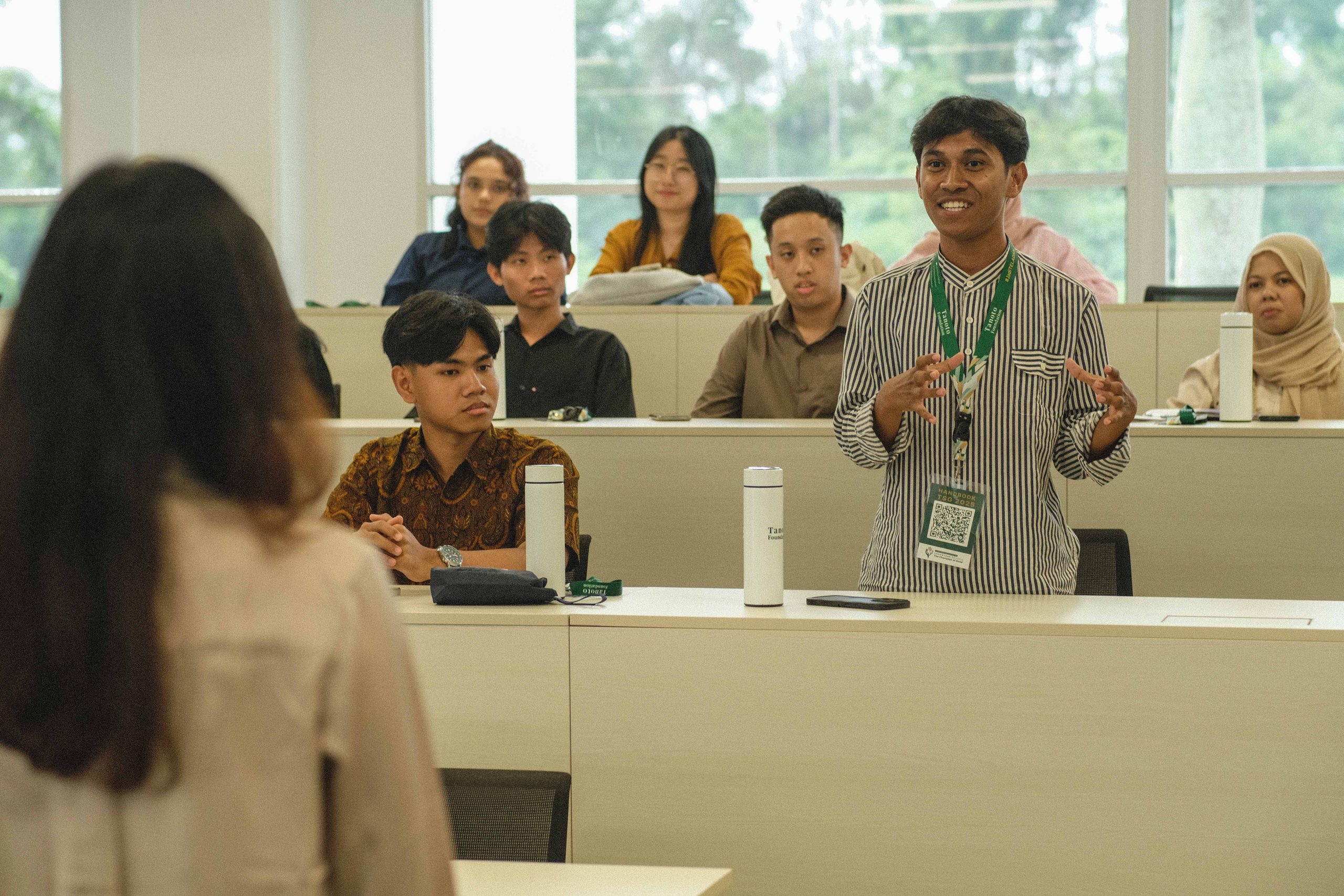
This is the thinking behind our flagship scholarship programme TELADAN: Teaching Leadership, Advancing the Nation. Alongside full tuition support and a monthly living allowance, which help remove the financial barriers that often stand in the way of gaining these experiences, Tanoto Scholars receive structured leadership development across 3.5 years, from their second to eighth semester.
A study on TELADAN, published as What Drives Graduate Employability? in the Journal of Further and Higher Education, found that graduate work readiness is shaped by factors such as grit, goal-setting, communication, collaboration, and independent decision-making, rather than academic performance alone. It is a finding that reflects much of what this programme sets out to build.
That same study also found that TELADAN scholarship recipients are 27% more likely to be employed and twice as likely to experience upward social mobility, reaching or surpassing their parents’ income level within just one year of work.
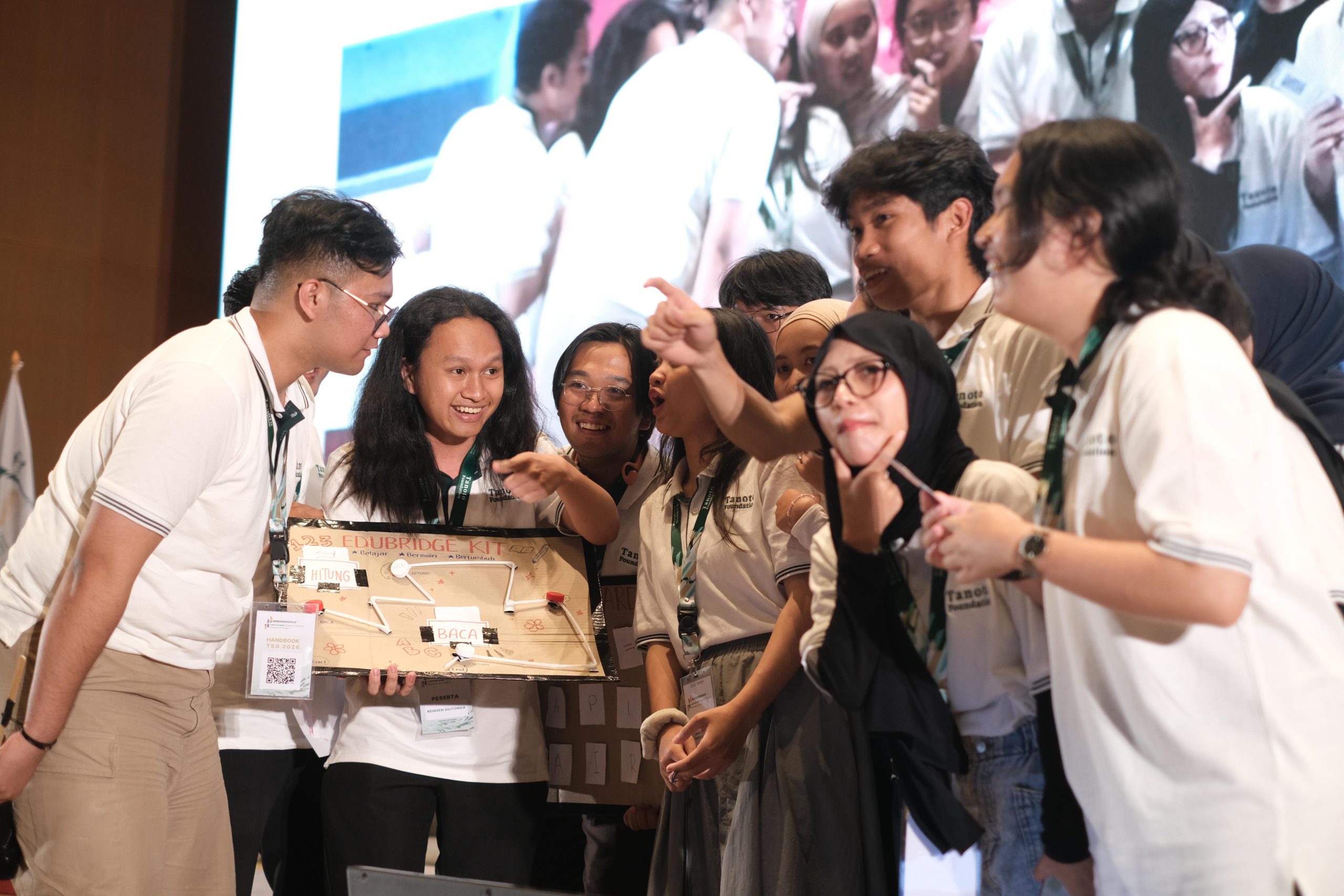
More than monetary benefits, the programme aims to unlock the full potential of its recipients, through a holistic approach to leadership development. It begins with self-leadership, where the scholarship recipients, or Tanoto Scholars, build an understanding of their own values, strengths, and areas for growth. Later, they progress to collaborative leadership through project-based learning and community engagement, before moving into direct preparation for the transition into professional life.
This structured development is reinforced by a wider ecosystem, including:
- The Tanoto Scholars Association
- Pay It Forward, a community-based give-back initiative
- Tanoto Scholars Gathering
- Internship opportunities
- Global exposure and sponsorship
- An alumni network spanning Indonesia and beyond
Since 2006, Tanoto Foundation has supported more than 8,800 Tanoto Scholars across 10 partner universities. By 2025, the impact continued to grow as Scholars had carried out more than 800 social projects of their own.
Applications for TELADAN Cohort 2027 Are Open
Registration is open to first-semester undergraduate students at our 10 partner universities: IPB University, Institut Teknologi Bandung, Universitas Brawijaya, Universitas Diponegoro, Universitas Gadjah Mada, Universitas Hasanuddin, Universitas Indonesia, Universitas Mulawarman, Universitas Riau, and Universitas Sumatera Utara.
For first-semester students who are still discovering their strengths or considering what their future might look like, TELADAN offers a structured place to begin. You do not need to have your career mapped out or already see yourself as a leader; what matters is a readiness to learn, develop, and contribute.
Applications are open from 1 July to 7 September 2026. For details on requirements, selection stages, and how to apply, visit bit.ly/JadiTELADAN2027 or follow @tanotoeducation on Instagram.
