• Siyuan Programme Delegation Visits Tanoto Foundation, Engages in Dialogue with Tanoto Scholars 

    Siyuan Programme Delegation Visits Tanoto Foundation, Engages in Dialogue with Tanoto Scholars 

    Tanoto Foundation welcomed a delegation of students from the Siyuan Programme at Tsinghua University as part of their international field study titled “Chinese Enterprises in Southeast Asia”. The visit formed part of a broader academic exploration of the education and philanthropy ecosystem in Indonesia. 

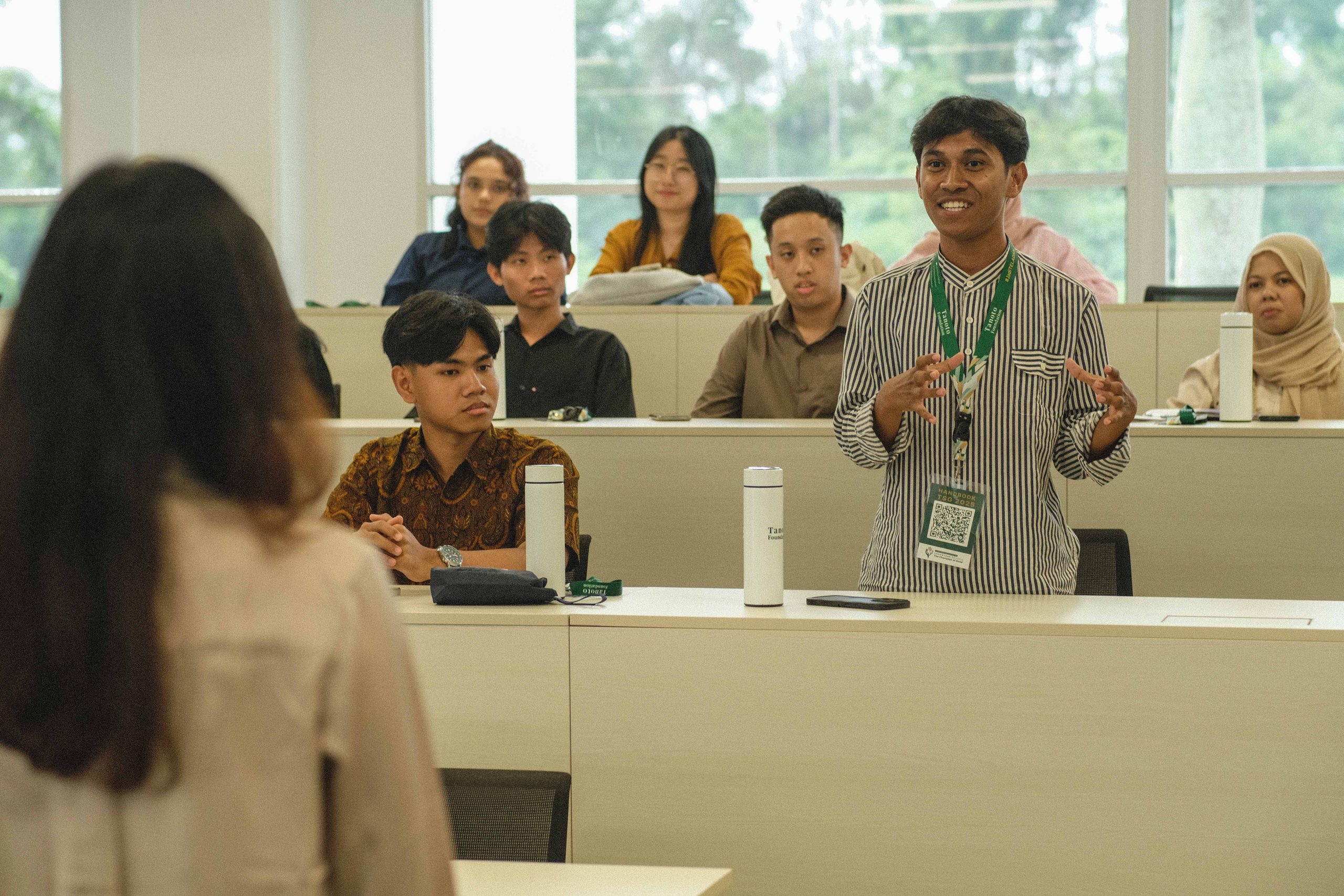
    The Siyuan Programme is recognised as one of China’s most prestigious leadership initiatives, nurturing selected first-year students from leading universities. During their visit to Tanoto Foundation office, the delegation took part in a structured dialogue session focused on education and youth development. 

    Through programme presentations and interactive discussions, Tanoto Foundation introduced TELADAN as a leadership development programme that integrates scholarship and academic excellence with community service. Siyuan students and Tanoto Scholars participated in small group discussions to exchange experiences, broaden cross-cultural perspectives, and deepen their understanding of the social and educational dynamics in their respective countries. 

    The visit also included several dedicated sessions: 

    • Academic Visit and Field Exposure 

    The delegation’s visit formed part of Siyuan’s international field study in Southeast Asia, offering first-hand exposure to Indonesia’s education and philanthropy landscape through engagement with Tanoto Foundation. 

    • Scholar Experience Sharing 

    Tanoto Scholars and Siyuan students shared their academic journeys, social contributions, and reflections on how leadership programmes shape values-driven and impact-oriented leadership. 

    • Alumni Insight Session 

    Participants also heard from distinguished alumni of the Belt & Road Talent Development Programme (a leadership development programme jointly developed by Tanoto Foundation and Tsinghua University): 

    Patricia Lisca, Deputy Director at Indonesia’s Financial Services Authority, who shared insights on cross-cultural leadership and global networks. 

    Adi Harsono, member of the China Committee at the Indonesian Chamber of Commerce and Industry (KADIN), who discussed international collaboration and institutional engagement. 

    Youth Leadership Exchange Across Cultures 

    The exchange provided an opportunity for emerging leaders from Indonesia and China to build connections, exchange perspectives, and explore long-term collaboration in education and development. 

    “This afternoon I had a very engaging discussion with my new friends from Indonesia. The whole discussion was truly impressive, as I seldom have the opportunity to speak so deeply with students from other countries,” said Li Xuxu, a Siyuan student from Tsinghua University. 

    Similarly, Kian, a Tanoto Scholar from the University of Indonesia shared his experience. 

    “It was not just about the projects being shared, but also about the meaning and passion behind them. We were introduced to new friends and connections abroad. I am very grateful and hope to take part in more events like this in the future,” said Kian. 

    In bringing together emerging leaders from Indonesia and China, the visit illuminated the power of dialogue, shared values, and global connection in shaping a future driven by leadership, purpose, and impact. 

  • Tanoto Foundation Inaugurates 176 TELADAN Scholarship Recipients for 2026, Strengthening Soft Skills Development in Higher Education

    Tanoto Foundation Inaugurates 176 TELADAN Scholarship Recipients for 2026, Strengthening Soft Skills Development in Higher Education

    Amid increasingly complex labour market competition and rapid change, university graduates are expected not only to excel academically but also to possess strong non-technical or soft skills. Research conducted by Harvard Business School and Kellogg School of Management, analysing more than 1,000 occupations and 70 million career transitions, confirms that individuals with strong soft skills are better able to adapt, earn higher incomes, and remain resilient in fast-changing environments.

    In response to this challenge, Tanoto Foundation, an independent philanthropic organisation in education founded by Sukanto Tanoto and Tinah Bingei Tanoto in 1981, through the TELADAN Programme, supports the government’s efforts to strengthen non-technical skills and leadership development among Indonesia’s young generation.

    The TELADAN Leadership Scholarship Programme (Transformasi Edukasi untuk Melahirkan Pemimpin Masa Depan) provides not only financial assistance but also structured soft skills and leadership development training.

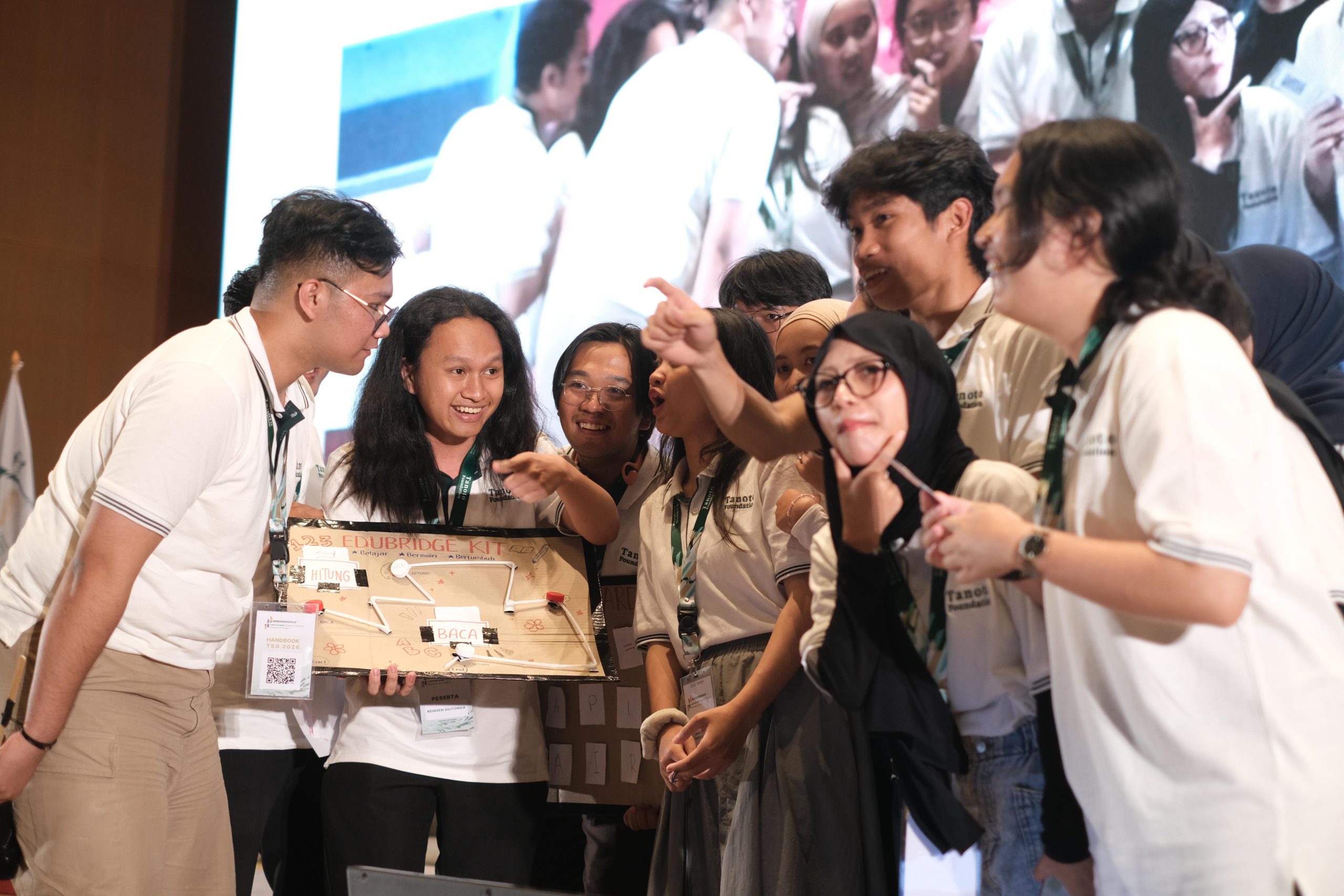
    On Wednesday, 14 January 2026, Tanoto Foundation officially inaugurated 176 new Tanoto Scholars (the designation for TELADAN scholarship recipients) from the 2026 cohort. These scholars come from ten Tanoto Foundation partner universities: Universitas Indonesia, Institut Teknologi Bandung, Universitas Gadjah Mada, Universitas Brawijaya, Universitas Diponegoro, IPB University, Universitas Riau, Universitas Sumatra Utara, Universitas Hasanuddin, and Universitas Mulawarman.

    The new Tanoto Scholars were selected from 9,283 applicants across the ten partner universities nationwide through a multi-stage selection process conducted between July and November 2025.

    Over seven semesters, Tanoto Scholars are developed as future leaders of Indonesia with nine core characteristics: self-awareness, driven mindset, innovation, continuous learning, care for others, empowering others, grit, integrity, and an entrepreneurial spirit.

    Jakarta’s Deputy Governor, Rano Karno, who delivered an inspirational talk at the inauguration ceremony, expressed his support for Tanoto Foundation’s efforts to create equal opportunities for society through education.

    “This scholarship is a trust from someone who believes that education can change lives, and even alter the course of a nation. One day, when you stand at a pivotal moment in your life, in a meeting room, a classroom, in villages, in cities, or even on this very stage, remember this day, that you once received an opportunity greater than others. Therefore, be a role model through your values and the positive impact you bring to your surroundings,” said Deputy Governor Rano Karno.

    “Good fortune is not inherited, it must be earned. Remember one important thing: this scholarship is not meant to be enjoyed alone, nor to live comfortably by oneself, but to open pathways for others. This is the true meaning of the TELADAN Programme, to be a light and create impact for many,” he added.

    Tanoto Foundation Chief Executive Officer, Benny Lee, emphasised that the TELADAN Programme is part of Tanoto Foundation’s long-term commitment to preparing Indonesia’s future leaders who are not only academically capable but also strong in character.

    “We believe that Indonesia’s future leaders must possess integrity, empathy, and the ability to create tangible impact for society,” said Benny.

    He also encouraged Tanoto Scholars to make the most of this opportunity by contributing meaningfully to their communities through the spirit of pay it forward, by extending the benefits they receive to the wider society and communities.

    “Out of thousands of applicants, you have been selected as Tanoto Scholars. However, this achievement should not lead to complacency. Instead, use this opportunity as a platform to continue learning and growing with humility, while creating impact for the wider community,” Benny added.

    The TELADAN Programme is designed across three development phases over three and a half years: lead self (semesters two to four), lead others (semesters five to six), and professional preparation (semesters seven to eight). Through these stages, Tanoto Scholars gain a range of development opportunities, including community service, national networking with fellow Tanoto Scholars, internship experiences, global-level personal development, and career preparation.

    Upon graduation, Tanoto Scholars become part of a cross-country alumni network, a leadership community committed to continuous learning, collaboration, and positive impact.

    According to the TELADAN Programme Evaluation Report: Enhancing Leadership Capacity and Graduate Competitiveness in Indonesia, published in 2025, TELADAN alumni have a 27 per cent higher likelihood of securing employment and a 36 per cent greater probability of achieving higher income levels compared to students who did not participate in the programme.

    The evaluation also found that the TELADAN Programme doubles alumni’s opportunities for upward social mobility. Some alumni have matched or even exceeded their parents’ income levels within just one year of work experience.

    Employers also assessed TELADAN alumni as demonstrating strong adaptability, leadership capabilities, and communication skills.

  • Gen Z: Challenges and Opportunities for Indonesia

    Gen Z: Challenges and Opportunities for Indonesia

    Gen Z is the largest demographic group in Indonesia – and also one of the most misunderstood. 

    Born between 1997 and 2012 they are digital natives and are extremely talented in some areas, but also lack many of the skills that employers need. At 27.94 per cent of Indonesia’s population, integrating these young people into the workforce is vital for the country’s future success.

    According to the Ministry of Education, Culture, Research, and Technology, there are five characteristics of Gen Z that set them apart from their predecessors.

    The first is having a global mindset – social media makes it easier to connect with people around the world and exchange information and opinions.

    Related to this is the second point: open mindedness. Exposure to people from around the world means they are more likely to accept that different people have different opinions.

    Third, they are tech savvy. They are the first generation to grow up with social media and using technology is generally second nature to them.

    The flip side of this brings us onto our fourth characteristic – they have enjoyed fewer physical interactions than previous generations since much of their communication takes place online, so they can sometimes need help learning interpersonal skills.

    Their open mindedness can sometimes pose a challenge, which is the fifth and final characteristic. When challenges arise and the pressure is on, Gen Z can sometimes find it hard to define exactly who they are and what they stand for.

    All this presents some clear opportunities for knowledge transfer from older generations to help Gen Z – and the country – thrive.

    Challenges Gen Z Face 

    According to the report ‘Gen Z in Transition: Between the Two Worlds’, presented at Kuliah-Kerja Fest!, a webinar organised by Tanoto Foundation and the Ministry of Education, Culture, Research, and Technology, there are clear challenges faced by Gen Z.

    Even among graduates with backgrounds in economics, engineering, and IT, there is a lack of knowledge and practical skills in automation, data processing, and numerical analysis to handle actual business challenges in the industrial sector. 

    The use of artificial intelligence and big data in the technology, finance, and manufacturing sectors in Indonesia still trails behind other developing countries. Understanding data-driven decision making is key, but somewhat lacking among Gen Z students.

    Preparing Gen Z for Workplace 

    Increasing digital skills and literacy should be the main focus for industry, government, and educational institutions. 

    According to a 2016 World Bank report, Indonesia has been experiencing a shortage of 9 million semi-skilled and skilled workers for 15 years. To make up for the shortage, Indonesia has to produce approximately 600,000 digital talents every year.

    If the Indonesian Gen Z cannot fill the position, these jobs will be given to skilled foreign labour. This is also reflected in research by the Ministry of Education, Culture, Research, and Technology, which show that 85% of job requirements involve digital skills.

    The private sector can play a role in eliminating the skill gap too by providing training and policies that support personal and career development.

    Employers can also encourage Gen Z to voice their ideas and opinions. This helps build communication skills and can also have a positive impact on the business as it can provide a new perspective.

    Preparing Gen Z for the workplace requires collaboration among the private sector, government, and academics. It can start with discussion forums, career development centres, and career guidance such as internships and research.

    Find out more about Gen Z here: Kuliah Kerja Fest! 2021 Report