• Tanoto Foundation and SMERU Collaborate to Develop Nutritional Status Map

    Tanoto Foundation and SMERU Collaborate to Develop Nutritional Status Map

    Tanoto Foundation, an independent family philanthropy organisation founded by Sukanto Tanoto and Tinah Bingei Tanoto in 1981, recently collaborated with SMERU Research Institute, an independent institution experienced in poverty and inequality research in Indonesia, to compile information about the nutritional status of children under five years old in the country at the sub-district and village levels.

    There were three types of nutritional data collected: HAZ based on children’s height and age, WAZ based on children’s weight and age, and WHZ based on children’s height and weight.

    The data is now accessible in the form of a Nutritional Status Map, which shows the nutritional status of children under five years old in six selected districts.

    The six districts –  Rokan Hulu (Riau), Central Lampung (Lampung), Tasikmalaya (West Java), Pemalang (Central Java), Jember (East Java) and South Central Timor (East Nusa Tenggara) – are all part of Indonesia’s list of 100 priority districts for stunting reduction.

    Previously, the only data available was at the wider national, provincial and district levels from RISKESDAS (Basic Health Research) conducted by the Indonesian Ministry of Health in 2013.

    Methodology

    According to SMERU, the Nutritional Status Map was created using the Small Area Estimation (SAE) method which is a common and reliable tool used to gauge poverty levels.

    Field visits were also conducted during the preparation of the map, to verify findings about the children’s nutritional status in 2019.

    As part of research for the map, the SMERU Institute also relied on Indonesia’s 2010 Population Census as well as 2011 RISKESDAS Podes (Village Potential) data which include information about villages such as availability of basic education and health facilities and number of health workers.

    Findings

    The nutritional status of children under five years old varied from one district to another, and there is no common reason shared among villages with high prevalence of nutritional issues.

    However, several factors were identified as indirect influences on the children’s nutritional status, including the level of education of toddlers’ parents, improved sanitation, access to clean water, the type of jobs held by parents, and the level of good nutrition intake by mothers and children (which  is dependent on mothers’ understanding of its significance).

    The nutritional status in the sample verification villages tended to improve over the 2013-2019 period. In Rokan Hulu Regency, there was a very encouraging decline, from 59.20% in 2013 to 27.25% in 2018.

    The existence of nutritional maps at the sub-district and village levels assists the Indonesian government in developing more targeted programmes and implementing stunting prevention policies with more efficient use of budgets and other resources.

  • A New Hope in Treating Fibrotic Human Disorder Patients

    A New Hope in Treating Fibrotic Human Disorder Patients

    A team of clinicians, clinician scientists and scientists from National Heart Centre Singapore (NHCS), Duke-NUS Medical School’s Cardiovascular & Metabolic Disorders Programme (CVMD), SingHealth Duke-NUS AMC and the Singapore-based biotech company Enleofen Bio, along with a newly forged partnership with Boehringer Ingelheim, is hoping a breakthrough discovery of investigational therapies will help patients with multiple fibrotic human disorders, including non-alcoholic steatohepatitis (NASH) and progressive fibrosing interstitial lung diseases (PF-ILDs).

    In May 2018, a research supported by Tanoto Foundation, an independent family philanthropy organisation founded by Sukanto Tanoto and Tinah Bingei Tanoto in 1981, discover the role of a specific protein, interleukin 11 (IL-11), in fibrotic diseases of the liver, lung, kidney, eye, skin and heart. The discovery stimulated the development of bio-therapeutics called neutralising antibodies, to target and block IL-11 to reverse inflammation and improve fibrosis in diseased body organs. The findings of the various pre-clinical studies were published in high impact scientific journals.

    Read More

    Also read: Prof Stuart Cook received first Tanoto Foundation professorship in cardiovascular medicine

    Photo courtesy of Duke-NUS Medical School

  • 150 New Tanoto Scholars Join TELADAN 2020 Cohort

    150 New Tanoto Scholars Join TELADAN 2020 Cohort

    Tanoto Foundation, an independent family philanthropy organisation founded by Sukanto Tanoto and Tinah Bingei Tanoto in 1981, has selected 150 students from 9 partner universities to be the recipients of our TELADAN Program 2020 cohort. The students have successfully undergone a lengthy selection process since September 2019, taking part in assessments including written tests and interviews. Besides receiving scholarships, TELADAN participants also acquire other skills such as leadership abilities and organizational skills which will prepare them to become future leaders. We spoke to five of the new Tanoto Scholars to get their reactions on being selected, and to hear about their aspirations and how they plan to give back to society:

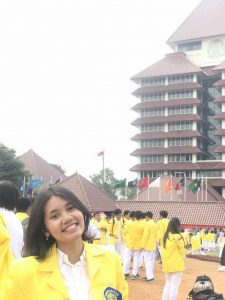
    Ribka Novita Sari

    Industrial Engineering, University of Indonesia (UI)

    ribka-

    I’m very happy and grateful because God has granted my wish. With the help of the TELADAN Program, I hope to become academically better and also to improve my organizational skills. I also hope that TELADAN continues to support Indonesian students to contribute their best to our society, nation and world.

    I am committed to maintaining a GPA of above 3.5. In my third year, I’d like to apply to become the university’s Management of Information Systems and Decision Support laboratory research assistant, and to take part in Industrial Engineering competitions. I also aspire to be a project officer during the Engineering Faculty open house event, and to be involved in social projects within the campus as well as beyond it.

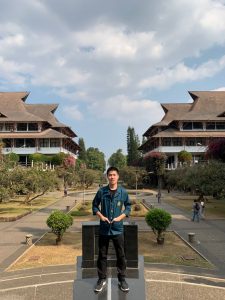
    Kevin Ryan

    Electrical and Informatics Engineering, Bandung Institute of Technology

    kevin-ryan-tanoto-scholars

    I’m so glad that my aspiration to be a part of the future leaders community has been realized. I can’t wait to attend leadership trainings, and improve my teamwork, management and communication skills, and self-development.

    Since I now have TELADAN’s support, I will surely be more diligent in studying. On the non-academic side, I aim to be more involved in organisations. I’m aiming to become the chair of at least one project – any project that will require me to lead a team.

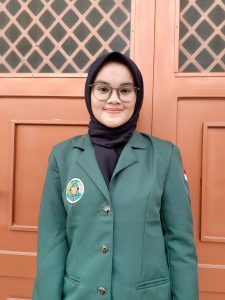
    Miranda Lutfi Nasution

    Law, University of North Sumatra

    miranda-lutfi-tanoto-scholars

    I believe that TELADAN Program leadership trainings will help me enhance my leadership skills, and other soft skills. Being a Tanoto Scholar means I can also expand my network with students from other universities in Indonesia.

    I’m determined to improve my GPA which is currently at 3.78. I also want to be among the Leading Achiever Students in my university, and to become a summa cum laude graduate in four years. I hope this will then usher me to a postgraduate program in International Law in Leiden University in the Netherlands.

    During my time in university, I plan to participate in numerous paper writing competitions, law debates and English debates. I also want to commit to the Tanoto Scholars Association (TSA) in Medan, and work together with my fellow Tanoto Scholars to share knowledge and plan activities.

    Farhan ‘Afif Arrahul

    Psychology, Gadjah Mada University

    farhan-arafif-tanoto-scholars

    I have known about the TELADAN Program since high school. For me, it is relevant and in line with my future life plan. By being a Tanoto Scholar, I’m confident I will be able to contribute to Indonesia, especially with my major which is psychology.

    I will not waste this opportunity, and I’m committed to participating in TELADAN Program activities, making my family proud, always improving my academic achievements and also taking part in the development of science. I also look forward to being active in organisations and event planning, and to serving society and my country.

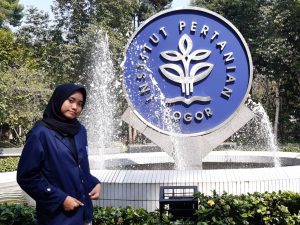
    Nabilah Nur Afifah

    Management, IPB University

    Nabilah-Afifah-tanoto-scholars

    My biggest motivation to be part of TELADAN Program is to become a responsible leader in the future who will bring pride to my family. With TELADAN, I wish to enhance my knowledge and experience, and be useful to the people around me. I also want to develop my soft skills, especially my leadership skills.

    As a Tanoto Scholar, I aim to uphold my responsibility by studying hard to improve my GPA, and also to be actively involved at planning events in and outside the campus, in other to improve my organizational skills.